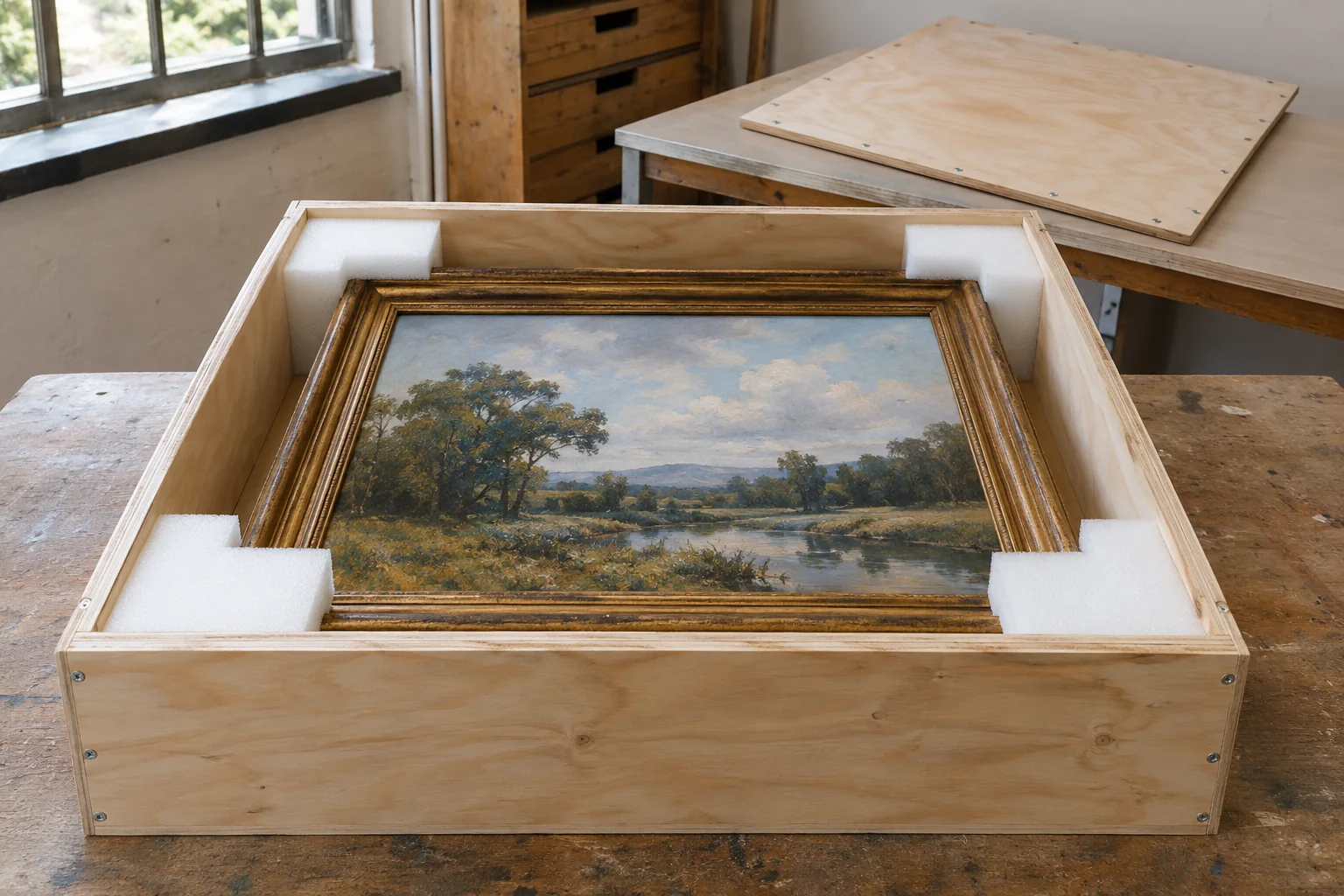
A crate may reach a gallery, studio or home after several people have handled it. The recipient needs enough space, a plan for the artwork and an understanding of how the case opens.
This guide outlines questions to ask before opening a wooden painting crate. It is not a substitute for instructions from the packer or advice from a conservator. If the painting, frame or case appears unstable, stop and seek specialist help.
Before the crate arrives
Ask who will receive the case, where it will be opened and what happens to the artwork afterwards. Check the crate’s external dimensions and estimated weight against the doorway, lift, stairs and space available.
Agree in advance whether a professional art handler will open the case, how many people are needed, and whether the crate must be kept for a return journey. If the work is on loan, ask the lender about opening and reporting requirements. Take particular care with a large or heavily framed work: the Canadian Conservation Institute’s handling guidance warns that a painting’s weight can be underestimated and recommends planning assistance and the route in advance.
Give the crate a suitable place to settle
Choose an indoor area with enough room to move safely and place the lid without obstructing exits. Prepare a clean, stable resting place for the painting before removing it. Keep drinks, loose tools and other clutter away from the work.
Temperature matters too. If a crate has been exposed to cold, ask the packer or a conservator when it should be opened. The Canadian Conservation Institute’s guidance on caring for paintings advises allowing a cold-exposed crate and its contents to acclimatise indoors before opening, to reduce condensation risk. The appropriate arrangements depend on the work and its journey; do not assume that opening immediately is always suitable.
Check the outside and find the opening instructions
Before opening, look for obvious damage, moisture or signs that the case has shifted. Note concerns and, where safe and permitted, photograph them. Tell the responsible party promptly and check any reporting requirements.
Locate the correct opening face and follow the instructions for that case. A crate may use screws, other fixings or internal restraints; not every visible panel is intended to be removed first. If instructions are missing or the lid seems unusually heavy, contact the packer or crate maker. Avoid guessing which component to remove or levering a panel near the artwork.
Look before lifting
Once the correct panel has been removed, take time to understand the arrangement inside. Identify the wrapped work, any fitted supports and the route by which it is meant to be removed. If possible, photograph the arrangement before disturbing it; this may help if the packing must be reassembled. Follow the packer’s instructions for any restraint or support rather than assuming the contents are free to lift.
Do not pull on the canvas, glass, decorative frame elements or hanging fittings. If you see loose paint, broken glazing, a loose frame ornament or another sign of instability, leave the work supported and contact a conservator or experienced art handler. Do not attempt to fix or clean it as part of the unpacking.
Move the painting with the right help
Agree the grip, position and number of handlers before lifting. The Canadian Conservation Institute advises supporting all four corners when a painting is lifted horizontally out of a crate, because the support or frame may be weak. Fragile or oversized pieces may need specialist equipment and experienced handlers.
Keep the route to the prepared resting place clear. Avoid touching the painted face or applying pressure to vulnerable areas. If the package or artwork cannot be moved comfortably and under control, pause and get additional help.
Record what you find
Compare the artwork with any existing condition report and photographs supplied by the owner or lender. Record the date, the people present and anything that appears different or needs a closer assessment. Where permitted, photographs can document the condition; do not move an unstable painting merely for a photograph. The Canadian Conservation Institute’s introduction to condition reporting explains how written notes and photographs can help track changes over time.
Report concerns promptly. Keep the crate and packing until you know whether they are needed.
Planning the next crate
If the work will travel again, tell the crate maker who needs to open it, whether reuse is required and what access is available at both ends. Discuss the opening method, internal supports and expected external size before a design is agreed. Our guide to choosing a painting crate explains what information can help when preparing a brief.
Painting Crate is London-based and focuses on bespoke wooden crates for paintings. Transport, collection, delivery, specialist packing and artwork handling should be arranged separately with the appropriate provider.